Keratosis pilaris: the chicken skin edit
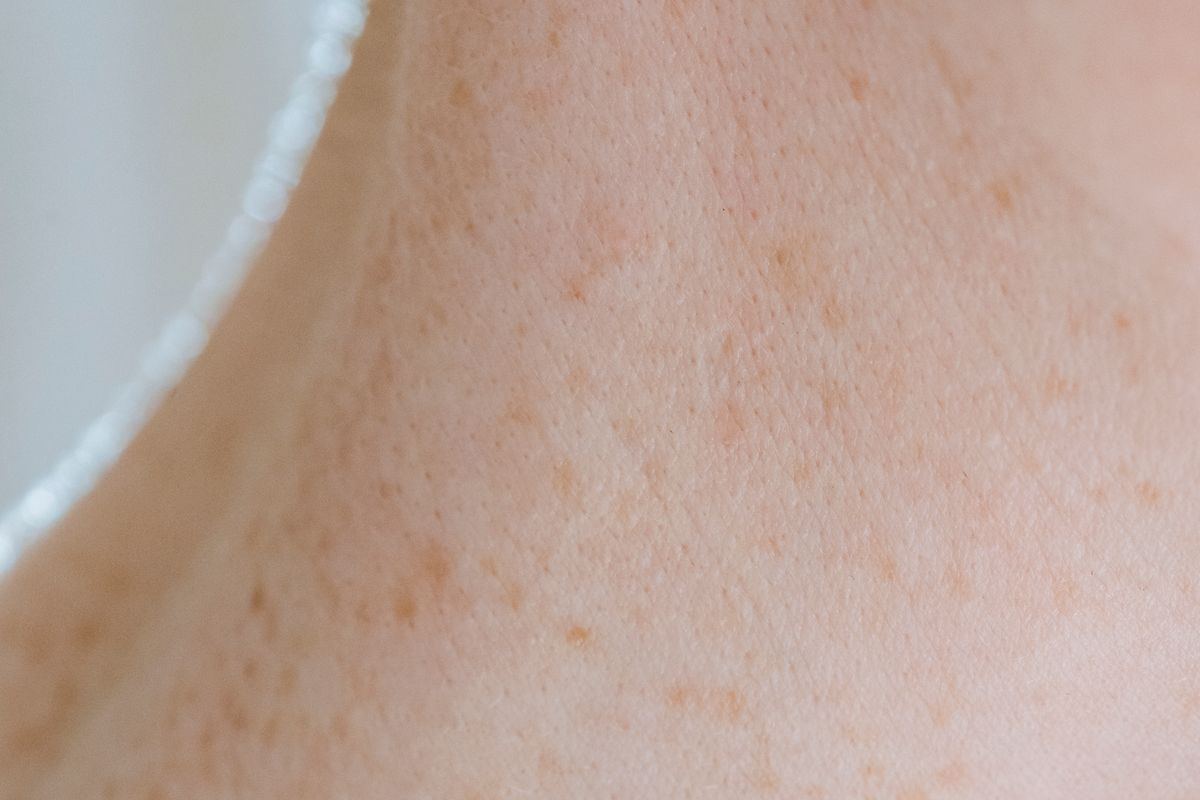
Keratosis pilaris is the most common rough-skin complaint on the body and the most misunderstood. It looks like small, sandpaper bumps with a faint red halo, usually on the upper arms and thighs, sometimes the cheeks. It is harmless, it runs in families, and most people who have it have already tried to scrub it off — which is the one approach that reliably makes it look worse. Here is what is actually happening in those follicles, and the routine that manages it.
What it actually is
Every hair follicle on the body sheds dead keratin cells as part of normal turnover. In keratosis pilaris, that shedding misfires: keratin builds up inside the follicle opening instead of leaving it, forming the tiny firm plug you feel as a bump, often with the hair coiled inside it. The redness around many bumps is inflammation of the follicle, not dirt, and not an infection. Nothing about this is a hygiene failure, which is worth stating because the “chicken skin” framing invites exactly that reading.
The mechanism is a keratin-behavior quirk, likely inherited — and quirk is the operative word, because it explains both why it resists cures and why it reliably responds to consistent chemistry.
What helps: leave-ons, not wash-offs
The chemistry that works is the keratolytic range of the ingredients the desk has already covered. Urea at ten percent and above dissolves the plugs from within while holding water — the mechanism is laid out in the urea body care guide. Lactic acid does parallel work and is the other standard. The method matters more than the choice: leave-on formulas, applied daily to clean dry skin before any heavier moisturizer, following the treatment step of the body care order. Wash-off versions rinse their contact time away and underperform accordingly. Expect four to eight weeks of unglamorous consistency before the texture genuinely changes.
Why scrubbing harder backfires
A scrub applies friction, and friction is inflammatory to a follicle that is already inflamed. Scrubbing the halo redness deeper does not remove the plug — the plug sits inside the opening, below where any particle reaches — so the effort buys irritation on top of texture, and the arms look worse, not better. The same logic condemns daily physical exfoliation and rough loofahs. Acids and urea reach the plug chemically, which is why the body exfoliators comparison keeps physical tools out of the KP routine entirely. Gentle is not a softness concession here; it is the mechanism.
Setting the expectation
The honest close: keratosis pilaris is manageable, not curable, and no product on any shelf changes that. Consistent leave-ons make the arms feel smooth to the touch and reduce the bumps substantially. The red halo often lingers longer than the texture does, and it fades on its own timetable. Stop the routine and the texture returns within weeks, because the keratin behavior never left. Anyone selling permanent clearance is selling past the evidence, and the desk will not repeat that claim — smooth is available, cured is not.
Frequently asked
- Can keratosis pilaris be cured?
- No. The tendency is considered a persistent, likely inherited pattern of keratin behavior, and the honest framing is management: leave-ons keep the follicles clear for as long as you keep applying them. Stop, and the texture returns — usually within weeks.
- How long before urea or lactic acid shows results?
- Expect four to eight weeks of daily use before the texture measurably changes. The follicle plug has to work its way out and be replaced by normal turnover, and no wash-off product speeds that materially. Anyone promising two weeks is selling speed the biology does not have.
- Should I exfoliate KP every day?
- No. Daily chemical exfoliation and daily scrubs are different animals — a lactic acid leave-on at label strength is the daily tool, while physical scrubs add friction the follicles do not need. More pressure does not remove the plug faster; it just reddens the skin around it.