Matching foundation shade, without the lighting trap
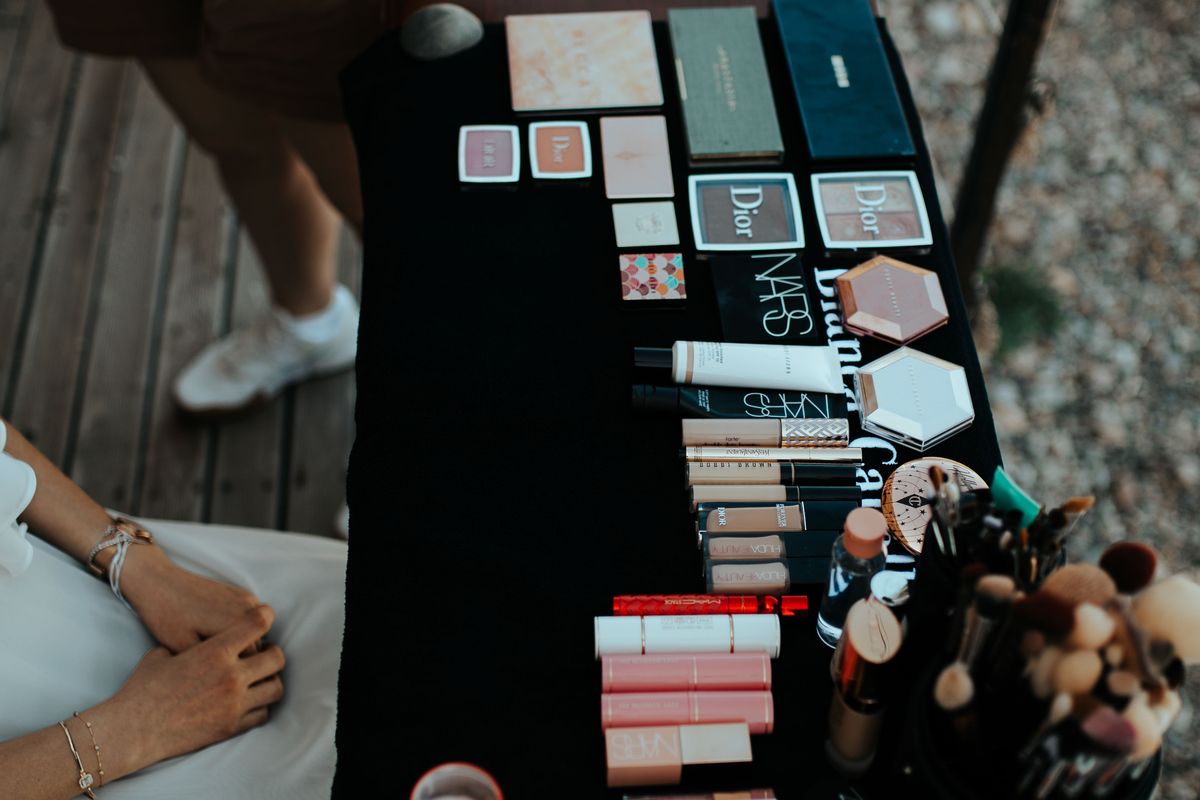
Foundation matching fails for three predictable reasons: two separate dials get read as one, the judgment happens under light that distorts hue, and the base itself changes color after application. All three are fixable with a process, and none of them require a counter to match you.
Undertone and depth are different dials
Depth is where you sit between light and dark — a value on a scale, and the easier half. Undertone is the hue under that value: warm leans yellow or golden, cool leans pink, and olive carries a gray-green cast that is its own position, not a midpoint. Most mis-matches are correct-depth, wrong-undertone: a cool-leaning shade on warm skin reads gray and flat, a warm one reads orange. Vein-color quizzes and jewelry heuristics are popular and unreliable; the honest position is that undertone is confirmed by testing, not diagnosed from folklore.
Why store lighting lies
Retail floors are lit to sell. Strong cool-white overheads drag warmth out of skin and pull every shade toward gray-green; warm spotlights inflate yellow and hide pink; mixed lighting does both at once. Worse, eyes adapt within minutes, so whatever light you have stood in for a while becomes your invisible reference point. That is the lighting trap: the shade that looked seamless under the counter’s lights is judged by your bathroom mirror an hour later and fails.
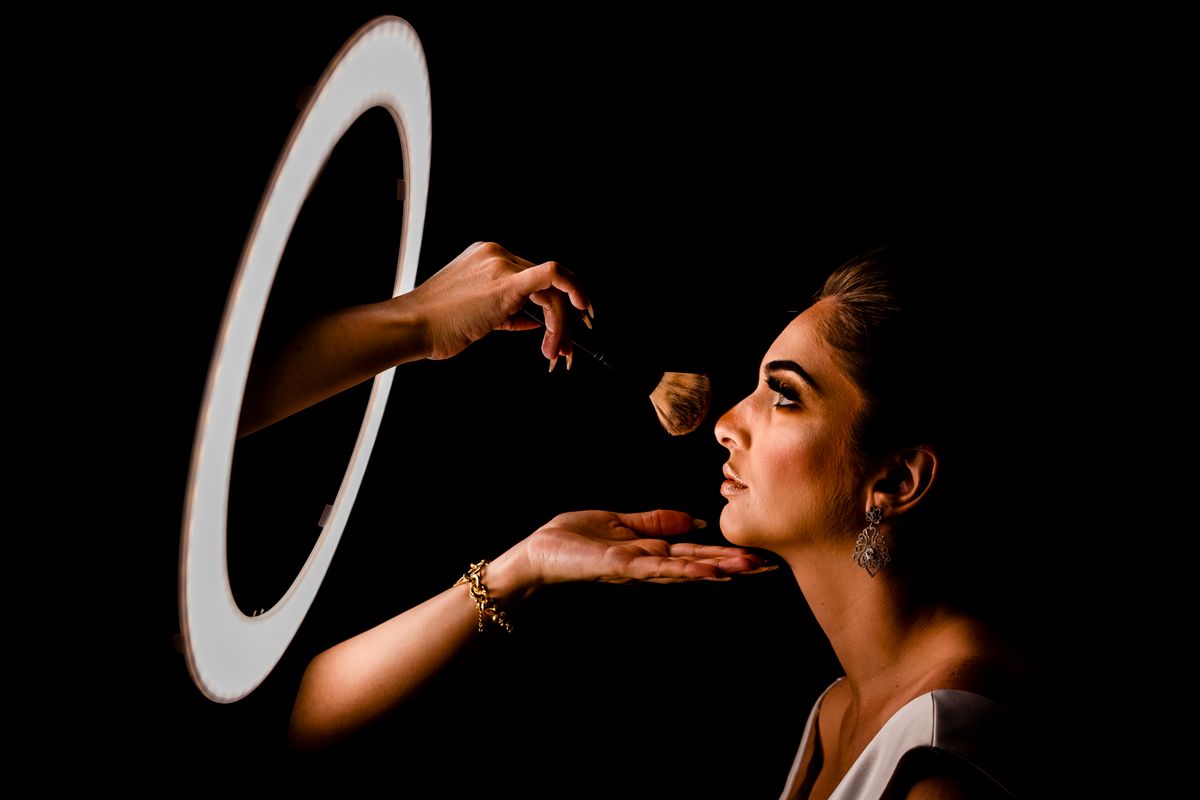
The jawline test, then the daylight check
Test along the jawline, not the hand or cheek. The jaw sits below blush, bronze, and redness, so it is the closest thing to undisturbed skin — and it borders the neck, which is the color the whole head has to blend into. Swipe two or three candidates from the jaw down the neck in short strips, let them set, and pick the one that disappears. A visible edge at the jaw is a failed match no matter how good it looked on the cheek.
Then take it to daylight. Stand near a window in indirect midday light, overheads off, and look again — this is the only common light source close to neutral. A shade that survives both the jawline test and the window check is a match.
Assume the base will shift
Most bases are not finished changing when they look right. Within twenty to thirty minutes of wear, water and volatile silicones evaporate, pigment concentrates, and formula oils interact with the skin’s own sebum — the net effect, called oxidization, is usually a fraction of a shade darker and warmer. Judge any candidate after that window, not at application. Two more shifts matter. Finish changes perception: a matte base reads darker and flatter than the same pigment in a dewy one, which the foundation finishes comparison covers axis by axis. And a formula’s undertone can lean differently than its marketing name suggests. If a foundation reliably turns orange by afternoon on you, that is formula behavior, and no amount of careful matching prevents it. What correctors and concealers do underneath the base is its own shade question — the concealer placement guide handles that zone by zone.
Matching, in the end, is a physical test with a pass condition: the base disappears at the jaw in daylight. Once it passes, you are done; nothing on the label adds information.
Frequently asked
- Why does my foundation look gray on my skin?
- Almost always an undertone mismatch — a cool-leaning shade on warmer skin reads gray even at the right depth. Move one step warmer in undertone before changing depth.
- Can I trust online shade finders?
- They help narrow the field, especially when anchored to a shade you already wear well in that brand. Across brands the numbering means little, so treat every online result as a candidate for the jawline-and-daylight test, not an answer.
- Does primer stop foundation from oxidizing?
- A grip primer can slow the movement of oils into the base, which may reduce shifting, but it does not prevent oxidization. The pigment concentration that comes with wear happens regardless; judge the match after the shift, not before.